What are Convolutional Neural Networks (CNNs)?
Convolutional neural networks, or CNNs, are distinguished from other neural networks by their superior performance with image, speech, or audio signal inputs. But how exactly do they work? In this lightboard video, Martin Keen with IBM, explains how this deep learning algorithm operates to enable machines to view the world as humans do.

What Is Phishing?
This IBM video explores various phishing strategies, from general attacks to targeted spear-phishing and whaling campaigns. The expert details social engineering tactics used to manipulate individuals and explains different attack vectors. Learn how to identify and defend against these threats.

What Do Neural Networks Really Learn? Exploring the Brain of an AI Model
Neural networks have become increasingly impressive in recent years, but there's a big catch: we don't really know what they are doing. We give them data and ways to get feedback, and somehow, they learn all kinds of tasks. It would be really useful, especially for safety purposes, to understand what they have learned and how they work after they've been trained. The ultimate goal is not only to understand in broad strokes what they're doing but to precisely reverse engineer the algorithms encoded in their parameters.
AI Inference: The Secret to AI's Superpowers
Explore the world of AI Inference, a game-changing technology that's transforming the way we make decisions and interact with machines. Martin Keen gets into the basics of AI Inference, including what it is, how it works, and its exciting applications in real-world scenarios. By leveraging Data-Driven Decision Making, AI Inference enables organizations to make more accurate and informed decisions, leading to improved outcomes and increased efficiency.
Can AI Think? Debunking AI Limitations
Can machines truly think? Join Jeff Crume and Martin Keen as they delve into the world of Artificial Intelligence and explore the complexities of probabilistic pattern matching, hallucinations, and errors in AI systems. From the limitations of current AI models to the potential of inference time compute models, discover the fascinating and often surprising landscape of AI reasoning.
AI vs Human Thinking: How Large Language Models Really Work
Are AI models truly "thinking," or just mimicking humans? 🤔 Master Inventor Martin Keen explores how Large Language Models (LLMs) stack up against the human brain in learning, reasoning, and memory. Uncover the surprising ways humans and AI differ in processing information and making errors!.
How Large Language Models Work
Large language models-or LLMs -are a type of generative pretrained transformer (GPT) that can create human-like text and code. There's a lot of talk about GPTs and LLMs lately, but they've actually been around for years! In this video, Martin Keen briefly explains what a LLM is, how they relate to foundation models, and then covers how they work and how they can be used to address various business problems.
Generative vs Agentic AI: Shaping the Future of AI Collaboration
https://www.youtube.com/watch?v=EDb37y_MhRw

How might LLMs store facts | Deep Learning
This video explains the multilayer perceptrons in a transformer and how they may store facts internally.

Transformers, the Tech Behind LLMs
This video provides a clear and engaging explanation of how large language models (LLMs) function, focusing on the transformer architecture.

Large Language Models explained briefly
This video by 3Blue1Brown offers a concise and intuitive overview of how large language models (LLMs) function. An LLM is a sophisticated mathematical function designed to predict the next word in a sequence of text. Rather than providing a single deterministic output, it assigns probabilities to all possible next words, allowing for varied and contextually appropriate responses. Watch the video for more details.
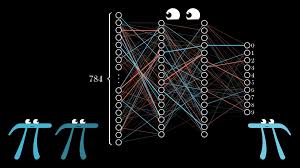
But what is a neural network? | Deep learning
An introductory video from the 3Blue1Brown series on deep learning. The focus is on explaining how neural networks work, especially in the context of recognizing handwritten digits.
7 AI Terms You Need to Know
AI is everywhere—and evolving fast! Martin Keen explains 7 essential AI terms, including Explainable AI, AI Agents, RAG, and ASI, while exploring tools like reasoning models, vector databases, and MCP. Discover how these innovations are shaping smarter, scalable AI systems for the future
What is Back Propagation
Neural networks are great for predictive modeling — everything from stock trends to language translations. But what if the answer is wrong, how do they “learn” to do better? Martin Keen explains that during a process called backward propagation, the generated output is compared to the expected output, and then the error contributed by each neuron (or “node”) is examined. By adjusting the node’s weights and biases, error is reduced and thus the overall accuracy improved.
Neural Networks Explained in 5 minutes
Neural networks reflect the behavior of the human brain, allowing computer programs to recognize patterns and solve common problems in the fields of AI, machine learning, and deep learning. Master Inventor, Martin Keen, makes some important points about neural networks and does it all in 5 minutes.
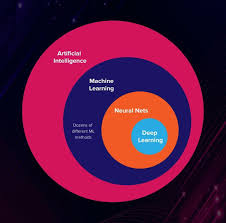
AI vs Machine Learning
The video explains the relationship and differences between Artificial Intelligence (AI), Machine Learning (ML), and Deep Learning. The video outlines how more data and more computational power have enabled advances in ML and deep learning. It also uses examples (like image recognition) to show how ML models are trained: you feed labeled data, the model adjusts internal parameters to minimize errors, and then it generalises to new, unseen inputs.
AI, Machine Learning, Deep Learning and Generative AI Explained
The video explains the difference between AI, machine learning, deep learning, and generative AI. AI is the broad field of making machines mimic human intelligence; machine learning is a subset where systems learn patterns from data; deep learning uses layered neural networks to learn complex features; and generative AI, powered by foundation models like large language models, creates new content such as text, images, or audio.

The 7 Types of AI - And Why We Talk (Mostly) About 3 of Them
Researchers have classified AI into seven categories; you may be disappointed to learn that we've only realized three of them so far! In this video, Master Inventor Martin Keen lays them out, from narrow AI we know and enjoy today to the other extreme, super AI, which may have superior emotional and intellectual intelligence than humans... someday (?).