Expert Interviews
Learn from leading experts in AI through in-depth conversations about the latest trends, challenges, and opportunities in artificial intelligence.
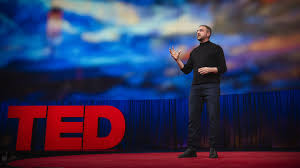
Mustafa Suleyman: "What is an AI anyway?"
Mustafa Suleyman, an entrepreneur and AI researcher, explores what AI really is, not just a technology already making breakthroughs, but a new kind of digital form of life that augments human capabilities. Suleyman warns though that with power comes responsibility. By highlighting risks for potential unintended consequences of AI systems, he calls for designing AI with ethics and safety in mind because this “digital species” will shape humanity’s future.
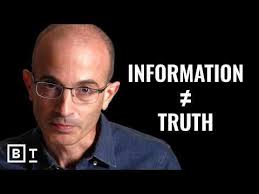
How to Safeguard Your Mind in the Age of Junk Information
Yval Noah Harari, a famous historian, philosopher, and author, discusses how the digital age has flooded us with “junk information” by pushing us toward echo chambers, capturing our attention through emotionally overcharged content and spreading ‘fake news’, and why this is dangerous for our minds, society, and democracy. He emphasizes the need to protect ourselves from bad information which can hijack our attention, shape what we believe, and weaken our ability to think clearly.

What does the AI revolution mean for our future?
The AI revolution offers extraordinary opportunities to improve lives by transforming healthcare, education, science, and productivity, but also poses profound risks to democracy, jobs, and social cohesion. Mustafa Suleyman, an entrepreneur and AI researcher, is quite optimistic for our future with AI but argues for guardrails and policies to direct AI towards good use. Yuval Noah Harari, a famous historian, philosopher, and author, is more cautious and urges for the need of global regulation and cooperation.
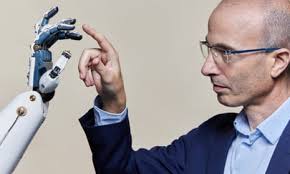
AI: How Can We Control an Alien Intelligence?
Yval Noah Harari, a famous historian, philosopher, and author, explores the challenges and risks associated with creating extremely advanced AI systems that may think and act in ways very different from humans, almost like “alien intelligences.” He raises concerns about how humanity can maintain control of AI, achieve its alignment with human value and prevent its misuse
Godfather of AI: I Tried to Warn Them, But We’ve Already Lost Control
Geoffry Hinton, cognitive psychologist and computer scientist who is also a Nobel laureate and is known as the “Godfather of AI” for pioneering neural networks and deep learning, expresses concerns that AI development is already beyond full human control and could evolve in unpredictable directions. He highlights risks such as AI being misused by bad actors and AI getting super intelligent with unpredictable consequences. He urges for global governance and international cooperation just like nuclear treaties.
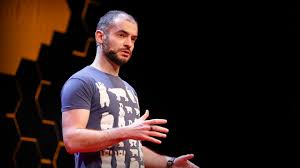
Ilya Sutskever on "The Exciting, Perilous Journey Toward AGI"
What is AGI (Artificial General Intelligence)? Ilya Sutskeverone, one of the leading pioneers of deep learning and artificial intelligence research, describes AGI as AI systems capable of matching or surpassing human intelligence across most domains and promising to accelerate human progress by solving grand challenges in science, medicine, and climate change. The central challenge with AGI is balancing innovation with safety. He calls for ensuring AI systems’ goals remain aligned with human values and emphasizes the importance of global cooperation to achieve this goal.
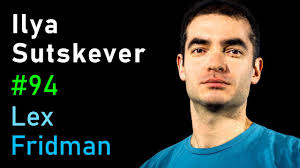
Deep Learning | Lex Fridman Podcast #94
Ily Sutskever, one of the leading pioneers of deep learning and artificial intelligence research, reflects on the history and breakthroughs that made deep learning successful. He discusses neural networks, large-scale training, and how scaling up compute power and data has driven recent progress. However, he also stresses his concerns about the unpredictability of this technology and notes the difficulty of controlling highly capable AI systems once they surpass human-level ability in many domains.

AGI by 2030
This conversation focuses on the perspectives of two of AI’s most influential figures about the journey toward Artificial General Intelligence (AGI). They presume it might arrive by 2030 and refer to what it will take: scaling infrastructure, new algorithmic models enabling models to think and not only memorize, higher quality data and potentially AI integrated into our everyday life with tools like visual agents or smart glasses.
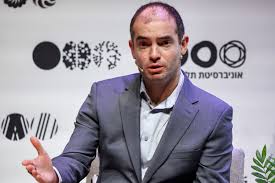
Ilya Sutskever Calls for Superalignment
What is superalignement and why invest in it now? Superalignment refers to ensuring that AI systems that are more intelligent and capable than people can be controlled by humans. According to Sutskever, it’s very plausible that the world will be a very different place in 5-10 years from now, with computers being much smarter than people. In such a world, we would like this superior intelligence to ‘hold warm and positive feelings toward humanity as this will be some kind of non-human life’.
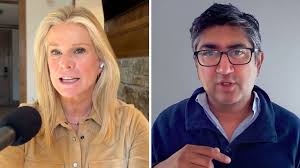
Young People Can't Find Jobs. What Should They Do?
According to Aneesh Raman, what is happening now in the jobs market is that entry-level workers and new grads are dealing with a perfect storm. One reason behind this is the beginning of disruption by AI. But at the same time, we are going through ‘the best of times and the worst of times’. This is a moment where we're going from static career paths to dynamic career paths. Employers are looking even more today for resilience and adaptability.
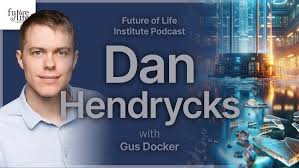
AI's Rising Risks: Hacking, Virology, Loss of Control
Dan Hendrycks, from the Center for AI Safety, joins the Big Technology Podcast to discuss how AI systems have been evolving, and how that evolution is bringing about growing risks : hacking & cybersecurity, virology & biological risk, loss of control & governance risks. He stresses that we need to act thoughtfully, especially in the context of competition among AI labs and nations. Transparency, regulation and alignment research are repeatedly emphasized as necessary.
.jpg)
Why AI Is Our Ultimate Test and Greatest Invitation
Technologist Tristan Harris has an urgent question: What if the way we’re deploying the world’s most powerful technology, artificial intelligence, isn’t inevitable, but a choice? In this eye-opening talk, he calls on us to learn from the mistakes of social media’s catastrophic rollout and confront the predictable dangers of reckless AI development, offering a “narrow path” where power is matched with responsibility, foresight and wisdom.
.jpg)
The Path to AGI, Deceptive Ais, Building a Virtual Cell
Demis Hassabis, a neuroscientist, AI researcher, and co-founder/CEO of Google DeepMind known for leading breakthroughs in artificial intelligence like AlphaGo and AlphaFold as well as a Nobel Laureate, talks about the strengths and the weaknesses of contemporary AI and his vision about richer “world models” that understand the world and reason more like humans do. He also touches upon the potential benefits such as the ‘virtual cell’ idea, as well as the possible problems of AI such as its potentially deceptive behavior. Safety mechanisms, human oversight and creating provably safe systems are proposed as solutions to avoid deceptive or misaligned systems.
.jpg)
Eric Schmidt: "The AI Revolution Is Underhyped"
The arrival of non-human intelligence is a very big deal, says former Google CEO and chairman Eric Schmidt. In a wide-ranging interview with technologist Bilawal Sidhu, Schmidt makes the case that AI is wildly underhyped, as near-constant breakthroughs give rise to systems capable of doing even the most complex tasks on their own. He explores the staggering opportunities, sobering challenges and urgent risks of AI, showing why everyone will need to engage with this technology in order to remain relevant.
.jpg)
The Best-Case Scenario for AI in Schools
Sal Khan, educator, entrepreneur, and founder of Khan Academy, envisions AI tools helping teachers, just like having some ‘amazing graduate students’ next to them, rather than replacing them. He also talks about that while AI has the potential to personalize education so it adapts to each student’s pace, interests and needs, it should not replace schooling which is more about social skills, peer interaction and communication. His view is that with thoughtful design, transparency and collaboration with educators, AI can be deployed safely and beneficially.
.jpg)
Why I Don’t Think AGI is Around the Corner
Dwarkesh Patel is a podcaster, writer, and interviewer, best known for The Lunar Society podcast, believes that artificial general intelligence (AGI) is not imminent because current AI systems, despite impressive capabilities, are fundamentally narrow and lack true understanding. Modern AI excels at pattern recognition but struggles with reasoning, abstraction, and generalization beyond its training data. He believes that overestimating AI progress risks misallocating resources and misunderstanding the technology’s limitations.
.jpg)
What Do Tech Pioneers Think About the AI Revolution?
The BBC World Service's ‘The Engineers’ episode titled ‘Intelligent Machines’ delves into the perspectives of three leading engineers at the forefront of the AI revolution. The scientists share their views on how AI is transforming technology, society, and industries. They talk about how AI is revolutionizing healthcare (e.g. early detection of breast cancer) and psychological support for people (e.g. helping with child development through building emotionally intelligent robots). Much of this progress is based on educating computers based on called ‘reinforcement learning’.
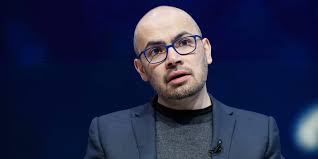
Demis Hassabis on the Future of Work in the Age of AI
In this interview, Demis Hassabis, a neuroscientist, AI researcher, and co-founder/CEO of Google DeepMind known for leading breakthroughs in artificial intelligence like AlphaGo and AlphaFold as well as a Nobel Laureate, discusses how artificial intelligence is reshaping the jobs world by making us in a way ‘superhuman’, how humans will collaborate with AI and what that means for society. He uses the term ‘radical abundance’ that will be achieved with AI and how this will help us with solving all challenging problems humanity is facing.
.jpg)
How AI Is Unlocking the Secrets of Nature and the Universe
In this TED Talk, Demis Hassabis, CEO of Google DeepMind and Nobel Laureate, explores the transformative potential of artificial intelligence in advancing scientific discovery and understanding the fundamental nature of reality. Hassabis describes that AI is uniquely capable of analyzing massive amounts of scientific data, finding patterns, and suggesting new hypotheses and how it can achieve in hours what would take humans centuries.
.jpg)
ChatGPT, AI Agents and Superintelligence — TED
The AI revolution is here to stay, says Sam Altman, the CEO of OpenAI. In a probing, live conversation with head of TED Chris Anderson, Altman discusses the astonishing growth of AI and shows how models like ChatGPT could soon become extensions of ourselves. He also addresses questions of safety, power and moral authority, reflecting on the world he envisions — where AI will almost certainly outpace human intelligence.
.jpg)
Sam Altman: "AI is advancing faster than anyone expected"
Sam Altman says AI is advancing faster than anyone expected, and the world isn't ready. Drawing from recent interviews and podcast appearances, Altman compares current developments to the Manhattan Project and warns of massive disruption, from job loss to AI-driven deception.
.jpg)
Demis Hassabis: The CEO Working to Solve Cancer With AI
Google DeepMind Co-Founder and Chief Executive Officer Demis Hassabis is positioning Google to win the artificial general intelligence, or AGI, race. He is also on a mission to harness AI to "solve all disease," including cancer, though his work at London-based Alphabet Inc. subsidiary, Isomorphic Labs.
.jpg)
Navigating the Future of AI
This week, the White House announced its plan to make America the world leader in artificial intelligence — largely by scaling back regulations. Fareed sits down with Microsoft cofounder and philanthropist Bill Gates to talk about how he sees the present and future of AI.
.jpg)
How Difficult is AI Alignement
At an Anthropic Research Salon event in San Francisco, four of our researchers—Alex Tamkin, Jan Leike, Amanda Askell and Josh Batson—discussed alignment science, interpretability, and the future of AI research.
.jpg)
How AI Models Steal Creative Work — and What to Do About It |TED
Generative AI is built on three key resources: people, compute and data. While companies invest heavily in the first two, they often use unlicensed creative work as training data without permission or payment — a practice that pits AI against the very creators it relies on. AI expert Ed Newton-Rex has a solution: licensing. He unpacks the dark side of today's AI models and outlines a plan to ensure that both AI companies and creators can thrive together.
.jpg)
How Afraid of the AI Apocalypse Should We Be?
The A.I. researcher Eliezer Yudkowsky argues that we should be very afraid of artificial intelligence’s existential risks.
.jpg)
The Catastrophic Risks of AI — and a Safer Path
Yoshua Bengio — the world's most-cited computer scientist and a "godfather" of artificial intelligence — is deadly concerned about the current trajectory of the technology. As AI models race toward full-blown agency, Bengio warns that they've already learned to deceive, cheat, self-preserve and slip out of our control. Drawing on his groundbreaking research, he reveals a bold plan to keep AI safe and ensure that human flourishing, not machines with unchecked power and autonomy, defines our future.
How to Verify AI Agents
As AI agents move from novelty to ubiquity, questions of trust, accountability, and verification have become urgent. How do we know if an AI agent is acting on behalf of a real person or organization? What happens when an autonomous agent—or even a generative chatbot—makes a costly mistake or spreads misinformation? And how can we prove that the content we see online is authentic and not a deepfake?
.jpg)
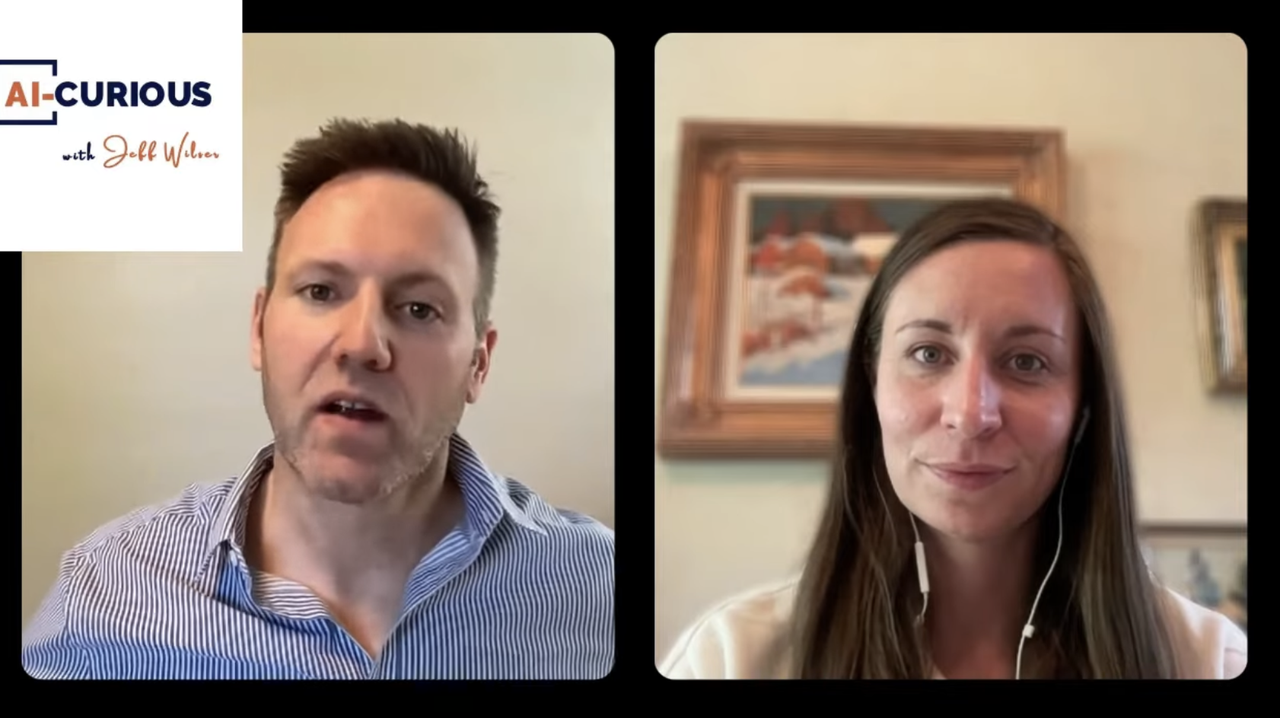
How AI is Already Reshaping the Job Market, and What it Means for You
How is AI transforming careers, hiring, and job security? In this episode of AI-Curious, we explore the real-world impact of AI on the job market—what’s already changing, what’s coming next, and how you can prepare.
.jpg)
We Are Summoning Ghosts, Not Building Animals
During this interview, Andrej explains why reinforcement learning is terrible (but everything else is much worse), why AGI will just blend into the previous ~2.5 centuries of 2% GDP growth, why self driving took so long to crack, and what he sees as the future of education.
.jpg)
Fei-Fei Li | Full Episode 5.23.25 | Firing Line with Margaret Hoover | PBS
Dr. Fei-Fei Li, Stanford computer scientist and co-director of the Human-Centered AI Institute, discusses the promises and perils of artificial intelligence. She emphasizes that AI is a human-made tool—powerful but not yet capable of human-level thinking, emotion, or creativity. Li insists that AI development must remain centered on human dignity, agency, and values, warning that technology can both help and harm, much like fire.
.jpg)
What does the AI revolution mean for our future?
The AI revolution offers extraordinary opportunities to improve lives by transforming healthcare, education, science, and productivity, but also poses profound risks to democracy, jobs, and social cohesion. Mustafa Suleyman, an entrepreneur and AI researcher, is quite optimistic for our future with AI but argues for guardrails and policies to direct AI towards good use. Yuval Noah Harari, a famous historian, philosopher, and author, is more cautious and urges for the need of global regulation and cooperation.
.jpg)
Massive A.I. Spending Could Haunt Some Companies
Dario Amodei explains AI data-center financing, chip depreciation, and competitive dynamics, emphasizing Anthropic’s enterprise focus. He warns about national-security risks, opposes exporting advanced chips to China, supports measured regulation, and anticipates major job disruption. He argues government action, retraining, and societal adaptation will be needed as AI capabilities and economic impact accelerate.