Safe Use of AI
AI can tackle some of humanity’s biggest challenges, but using it effectively requires AI literacy. AI-literacy will thus become a necessary skill as the digital world will be increasingly integrating into our everyday life. Nevertheless, being AI literate extends beyond having the knowledge and skills to use AI tools. It requires a deeper understanding of what AI is, how it functions, and how possible algorithmic bias can spread unfairness and false information. In a nutshell, AI literacy involves using AI safely and understanding the risks it may pose . For this reason, de-mystify.ai helps build a broader awareness of AI by providing clear and concise guidelines for safely integrating it into our lives. Our advice has been sourced from experts in the field and boils down to the following three ‘golden’ rules:
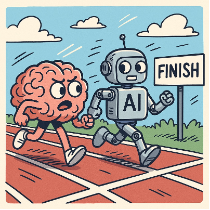
Do not over rely on AI- Modern technology, in our case AI, provides ways both to train our minds and to erode them, something like a contest between cognition and un-cognition. This is a contest of the highest importance for our future, one we need to win. We should all engage with AI to develop our skills, boost our productivity and prepare for the coming digital revolution but we should not over-rely on it for our analytical, critical and creative thinking as this may weaken our intellectual abilities and discourage our intellectual curiosity. This would then trigger a vicious circle by further aggravating our over-dependence on AI.
Simply put, we should find the perfect balance between training our mind and outsourcing our thinking to AI so that our mind never stays behind!
Do not replace human interactions with AI - Low-cost and accessible AI therapy chatbots have been gaining increasing attention lately, with many young people resorting to them to find companionship 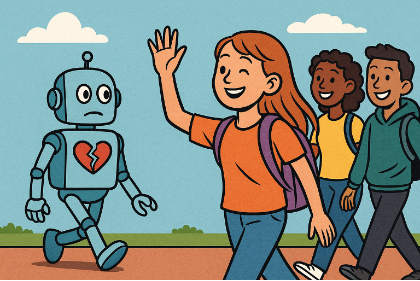 or overcome their mental health challenges. Recent suicides linked to chatbot use for therapy purposes, along with a new Stanford study, reveal that AI therapy chatbots may not only lack effectiveness compared to human therapists but could also contribute to harmful stigma and dangerous responses from the AI models. Another study, conducted by MIT and Open AI found that people consistently chatting with Chat GPT to find companionship, actually reported feeling lonelier and more isolated. In other words, there is no magic recipe for substituting the beneficial effect of social relationships on our mental wellbeing.
In short, we should step away from the chatbot and go make connections with the real world!
or overcome their mental health challenges. Recent suicides linked to chatbot use for therapy purposes, along with a new Stanford study, reveal that AI therapy chatbots may not only lack effectiveness compared to human therapists but could also contribute to harmful stigma and dangerous responses from the AI models. Another study, conducted by MIT and Open AI found that people consistently chatting with Chat GPT to find companionship, actually reported feeling lonelier and more isolated. In other words, there is no magic recipe for substituting the beneficial effect of social relationships on our mental wellbeing.
In short, we should step away from the chatbot and go make connections with the real world!
 Critically evaluate AI content - We still have very little insight into how AI models generate their responses, what data was used to train them, whose perspectives might be missing and what assumptions are built into their recommendations. For this reason, AI has been dubbed as ‘black box’, one that can also generate realistic images, video or audio and provide convincing content. As this content may be polished, yet misleading and not representing the truth, it requires our scrutiny and most critical judgement to avoid decisions and actions based on falsified material.
In a nutshell, we should be using AI responsibly by putting our judgement to use!
Critically evaluate AI content - We still have very little insight into how AI models generate their responses, what data was used to train them, whose perspectives might be missing and what assumptions are built into their recommendations. For this reason, AI has been dubbed as ‘black box’, one that can also generate realistic images, video or audio and provide convincing content. As this content may be polished, yet misleading and not representing the truth, it requires our scrutiny and most critical judgement to avoid decisions and actions based on falsified material.
In a nutshell, we should be using AI responsibly by putting our judgement to use!