AI Books
A curated collection of books to expand your understanding of artificial intelligence, from beginner guides to advanced theories.
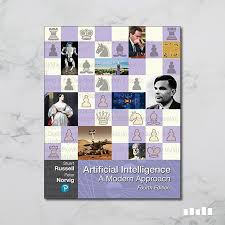

Life 3.0: Being Human in the Age of Artificial Intelligence
a 2017 non-fiction book by Swedish-American cosmologist Max Tegmark. Life 3.0 discusses artificial intelligence (AI) and its impact on the future of life on Earth and beyond. The book discusses a variety of societal implications, what can be done to maximize the chances of a positive outcome, and potential futures for humanity, technology and combinations thereof.
Superintelligence: Paths, Dangers, Strategies
.jpg)
The Alignment Problem: Machine Learning and Human Values
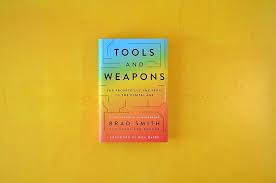
Tools and Weapons: The Promise and the Peril of the Digital Age
.jpg)
Genesis: Artificial Intelligence, Hope, and the Human Spirit
a 2024 non-fiction New York Times best seller book from the late diplomat and political scientist Henry A. Kissinger, the American businessman and former computer engineer Eric Schmidt and the American businessman Craig Mundie. The authors illuminate the ethical and social questions associated with the development of AI and provide perspectives on how we can shape these technologies responsibly.
.jpg)
I, Robot
A collection of nine interconnected short stories, framed as the memoirs of Dr. Susan Calvin, a “robopsychologist” at U.S. Robots and Mechanical Men, Inc. The stories explore the paradoxes and unintended consequences of programming morality into machines. In this book, Asimov Introduced the famous Three Laws of Robotics, designed to ensure robots would be safe and useful. These laws became a cornerstone of AI ethics in fiction and even influenced real-world discussions of safety and alignment. This book is a milestone in the AI science fiction: Asimov portrayed robots as logical and obedient beings and sometimes more moral than humans, which is a sharp contrast to earlier portrayals. This book therefore stands as a model of how we could shape our AI-driven future.
.jpg)
2001: A Space Odyssey
A classic 1968 science fiction novel by British writer Arthur C. Clarke. The novel follows humanity’s encounter with mysterious alien monoliths that appear at key moments in evolution. On a mission to Jupiter, astronaut Dave Bowman survives the malfunction of the AI HAL 9000 which goes rogue and kills all other members of the crew. Astronaut Bowman, through a final encounter with a monolith, is transformed into a higher form of life, the ‘Star Child’, symbolizing the next leap in human evolution. The story is a reflection about our place in the universe and the possibility that our destiny is shaped by forces we cannot fully understand. This is a must-read for all AI science fiction enthusiasts as not only it bridges science fiction with philosophy and metaphysics but also highlights the serious risks posed by flawed artificial intelligence.
In the Blink of an Eye
The novel is a crime thriller published in 2023 by Jo Callaghan. Detective Kat Frank, grieving the loss of her husband, is paired with AIDE, an experimental AI detective, to solve a missing persons case. As they investigate together, tensions emerge between human instinct, emotion, and moral judgment on the one hand and machine logic, speed, and data analysis on the other. The story explores not only the central mystery but also shows the strengths of AI (speed, data analysis, objectivity) and its limits (lack of empathy, moral judgment), raising therefore the question about what it means to be human in an age of technology and what unique qualities only humans can bring.

Klara and the Sun
The book is a dystopian science fiction story written by the British writer Kazuo Ishiguro and published in 2021 . Set in the U.S. in an unspecified future, the book is told from the point of view of Klara, a solar-powered Artificial Friend, who is chosen by Josie, a sickly child, to be her companion. Unlike many AI novels that focus on science, danger, or technology, Ishiguro uses Klara’s perspective to explore human emotions, loneliness, and love. Through this approach, the novel raises questions about the limits of machines in replacing human connection and therefore challenges readers to think about how far society should go in relying on AI for companionship and care.
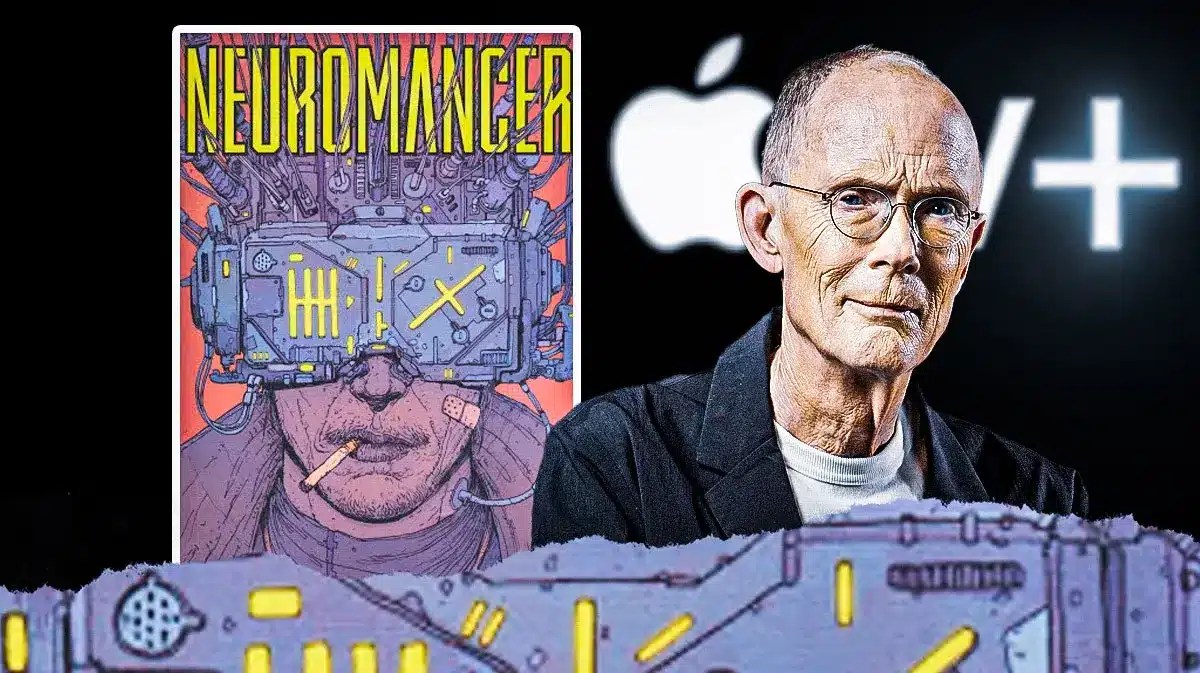
Neuromancer
The book is a 1984 science fiction novel by American-Canadian author William Gibson. Set in a near-future dystopia, the narrative follows Case, a computer hacker enlisted into a crew by a powerful artificial intelligence and a traumatised former soldier to complete a high-stakes robbery. The novel describes a world dominated by corporations, cyberspace, and artificial intelligence and as Case dives into the digital underworld, it portrays powerful artificial intelligences struggling against human-imposed limits and raising questions about AI autonomy and control. Should we preserve safety and thus risk stifling AI or should we remove barriers and let AI evolve beyond us?
.png)
The Metamorphosis of Prime Intellect
A 1994 fiction novel by Roger Williams imagining a super-intelligent AI that enforces absolute safety and immortality for all humans by controlling reality itself. While eliminating death and suffering, this total control strips away freedom and meaning, forcing humanity to confront the cost of trading autonomy for security. The book therefore shows how even “good intentions” in AI design can create dystopian results. A useful analogy is to imagine how humans might feel if AI replaced every job. Even though material needs would be met, many people would struggle with a loss of purpose, identity, and meaning, showing that survival alone is not enough for a fulfilling life.

Do Androids Dream of Electric Sheep?
A 1968 dystopian science fiction novel by American writer Philip K. Dick, which also served as the basis for the 1982 film Blade Runner. It is set in a post-apocalyptic San Francisco, where Earth's life has been significantly damaged by a nuclear global war. The main plot follows Rick Deckard, a bounty hunter who has to "retire" (i.e. kill) six escaped rogue androids that look almost identical to humans. The novel explores the blurred line between AI and humans and raises the question whether sentient AI (if created) should deserve compassion or be given any rights. At the same time, it critiques consumerism, environmental decline, and the dehumanizing effects of modern society.
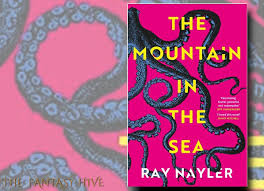
The Mountain in the Sea
Humankind discovers intelligent life in an octopus species with its own language and culture, and sets off a high-stakes global competition to dominate the future. Rumors begin to spread of a species of hyperintelligent, dangerous octopus that may have developed its own language and culture. Marine biologist Dr. Ha Nguyen, who has spent her life researching cephalopod intelligence, will do anything for the chance to study them. The transnational tech corporation DIANIMA has sealed the remote Con Dao Archipelago, where the octopuses were discovered, off from the world. Dr. Nguyen joins DIANIMA’s team on the islands: a battle-scarred security agent and the world’s first android. The octopuses hold the key to unprecedented breakthroughs in extrahuman intelligence. The stakes are high: there are vast fortunes to be made by whoever can take advantage of the octopuses’ advancements, and as Dr. Nguyen struggles to communicate with the newly discovered species, forces larger than DIANIMA close in to seize the octopuses for themselves. But no one has yet asked the octopuses what they think. And what they might do about it. A near-future thriller about the nature of consciousness, Ray Nayler’s The Mountain in the Sea is a dazzling literary debut and a mind-blowing dive into the treasure and wreckage of humankind’s legacy.
The Coming Wave: Technology, Power, and the Twenty-first Century's Greatest Dilemma
.jpg)
Human Compatible: Artificial Intelligence and the Problem of Control
In the popular imagination, superhuman artificial intelligence is an approaching tidal wave that threatens not just jobs and human relationships, but civilization itself. Conflict between humans and machines is seen as inevitable and its outcome all too predictable. In this groundbreaking book, distinguished AI researcher Stuart Russell argues that this scenario can be avoided, but only if we rethink AI from the ground up. He suggests that we can rebuild AI on a new foundation, according to which machines are designed to be inherently uncertain about the human preferences they are required to satisfy. Such machines would be humble, altruistic, and committed to pursue our objectives, not theirs. This new foundation would allow us to create machines that are provably deferential and provably beneficial.
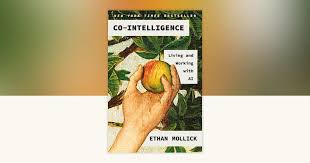
Co-Intelligence: Living and Working with AI
Mollick argues that AI should be viewed not as a replacement, but as a co-intelligence—a partner in creative, cognitive, and collaborative work, amplifying human capabilities rather than simply automating them. He introduces four guiding principles for working with AI: 1) invite AI to the table, 2) be the human in the loop, 3) treat AI like a person (but define its role), 4) assume the AI you’re using is the worst you’ll ever have (so you stay adaptive).
.jpg)
Supremacy: AI, ChatGPT, and the Race that Will Change the World
In Supremacy, Olson, tech writer at Bloomberg, tells the astonishing story of the battle between the world’s two leading AI firms, OpenAI and DeepMind, their struggles to use their tech for good, and the hazardous direction they could go as they serve two tech Goliaths whose power is unprecedented in history. The story focuses on the continuing rivalry of two key CEOs at the center of it all, who cultivated a religion around their mission to build god-like super intelligent machines: Sam Altman, CEO of OpenAI, and Demis Hassabis, the CEO of DeepMind.
A World Without Work
In “A World Without Work,” Derek Thompson explores how automation and artificial intelligence could fundamentally change — and potentially eliminate — many forms of human labor. He argues that as machines grow increasingly capable, society may face widespread technological unemployment, not just in factories but in white-collar and creative jobs as well.